







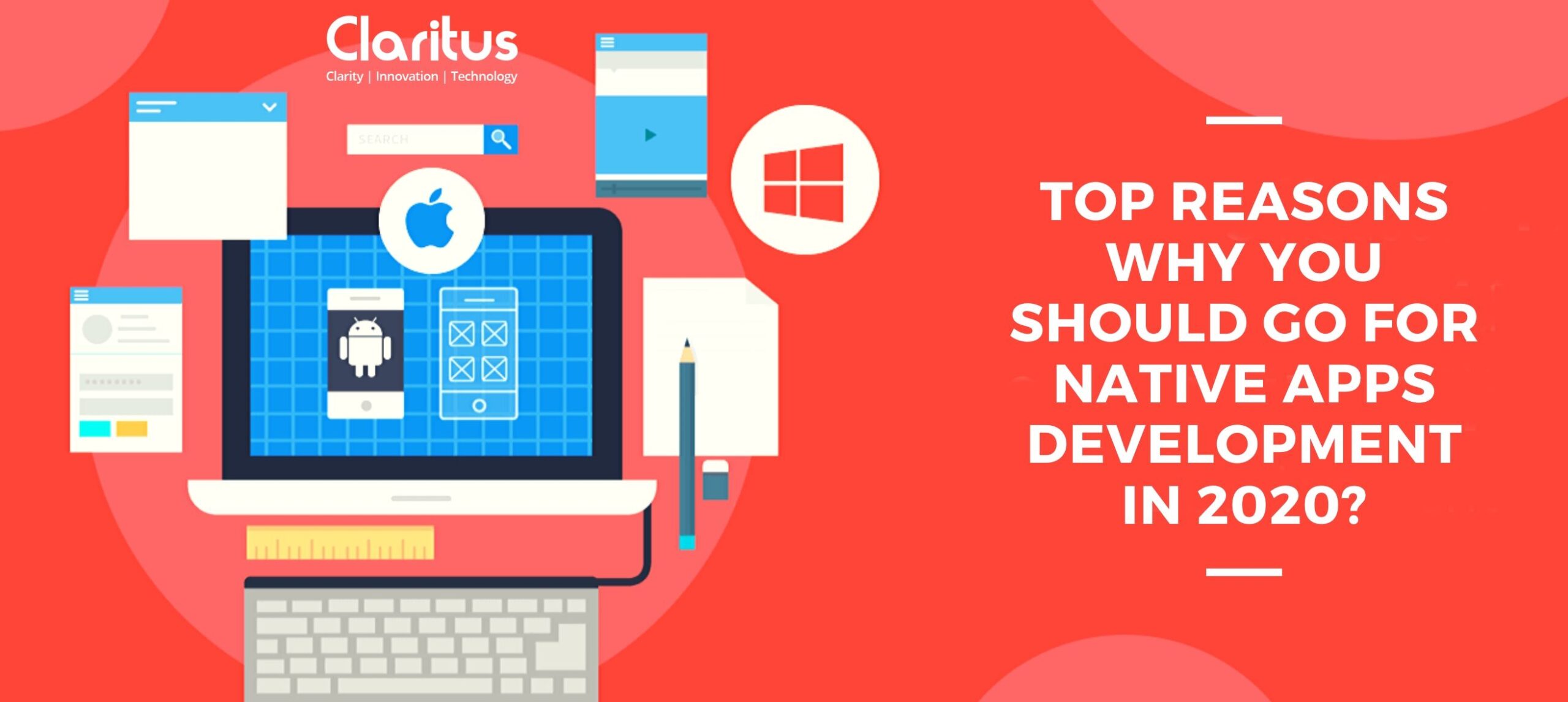
Do You Know – Top Reasons to Choose Native Apps Development in 2020?

Native apps development offers better speed, security, and platform integration compared to hybrid approaches. Businesses choose native apps to deliver responsive and feature-rich experiences. Understanding these reasons helps organizations select the right development approach.
Reasons To Choose Native Apps Development
Native apps are applications that are written in languages specific to the operating systems that they are developed for. If you want to provide the best user experience possible in terms of the look and feel of your application, then native apps development may be a good option for you. Why? Because when an app closely follows the guidelines for popular platforms, users are quick to become familiar with how to use it. But there are also plenty of other reasons that maybe even more convincing for you:
Performance
Native apps run and work much faster than other apps like non-native apps because they are written in languages that are fully supported by the platform’s ecosystems. They tend to run more smoothly, too, as they have access to exclusive APIs and components which are optimized for different screen sizes and system versions.
Security
While most hybrid programs rely just on system browser safety, cross-platform and native programs are safeguarded by many distinct layers of a working system, making them hard to exploit. They also don’t rely on any third-party frameworks, using just official APIs that have been profoundly analyzed across various program versions.
Access To Developer
With many years of valuable experience, they understand the Android and iOS systems inside out. This makes them effective at solving a variety of kinds of issues connected with executing non-standard behavior, animations or views. They are also able to advise you as soon as it has to do with technical, UX and UI options – so you can produce the very best product possible that’s also tailored to this stage.
Scalability
Native jobs are quicker to configure since they have to be compatible with just 1 platform. Even though there are just two native jobs, they’re totally different, so that you don’t need to be concerned about the compatibility of program dependencies between variants for various programs (Android, iOS) and also you may freely use any new attributes on a particular platform. The less constraints there are, the easier it is to climb.
Better UI UX
UX/UI is merged within a given stage, so it’s already well-known by consumers. The UX patterns recur in other native programs, therefore people will intuitively understand how to maneuver around on your program too. User experience can be far better since the greater performance enables everything to run smoothly. It’s also simpler for the founders to stick to the enforced criteria when designing and creating a program.
Let’s Wrap-Up
Great functionality, cost-effectiveness, reliability, and also the capability to get to the stars – picking to proceed with native apps development may seem like hitting the bull’s eye if you have already made a decision to make a mobile program. And the effective examples above give you clear signs that these aren’t only empty phrases.
Choosing native apps development supports long-term performance and user satisfaction. It remains ideal for complex applications. At Claritus Consulting, teams help organizations adopt native app strategies that meet business and technical requirements.
