







Enterprise Digital Transformation Roadmap for 2026
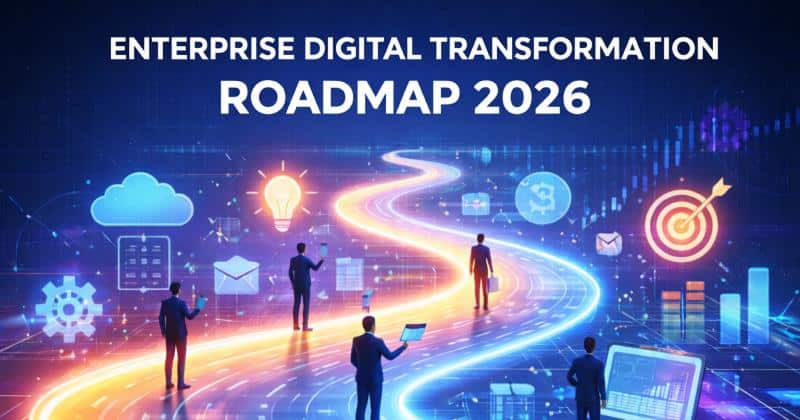
Most enterprises heading into 2026 are already running on a mix of cloud platforms, legacy systems, and newer AI-driven tools. This is where a structured digital transformation roadmap becomes necessary.
The challenge is not adoption. It’s alignment.
Core applications are still dependent on older architectures. Data sits across multiple systems without consistent ownership or governance. AI initiatives are being tested but rarely integrated into day-to-day operations.
As a result, teams work around systems instead of relying on them. Decisions take longer than they should. Investments in technology exist, but the outcomes are uneven.
This is where a structured roadmap for digital transformation becomes necessary. It helps organizations decide what to modernize, what to rebuild, and how to connect cloud, data, and AI into a system that supports the business.
Why Digital Transformation is the Game Changer of 2026
The shift to digital-first enterprises is already complete. The gap now lies in execution.
According to Microsoft, cloud-native organizations can achieve up to 2x faster innovation cycles, supporting quicker product releases and improved resilience.
Gartner predicts that by 2026, over 80% of enterprises will have deployed Generative AI-enabled applications in production, marking a shift from experimentation to enterprise-scale adoption.
What this means:
- Transformation is now tied directly to revenue and efficiency
- AI is no longer optional
- Cloud and data maturity define competitive advantage
What Is a Digital Transformation Roadmap?
A digital transformation roadmap is a clear, step-by-step plan for turning strategy into delivery. It maps what to modernize first, what to rebuild, and how cloud, data, and AI fit together, so teams stop running side projects and start shipping outcomes.
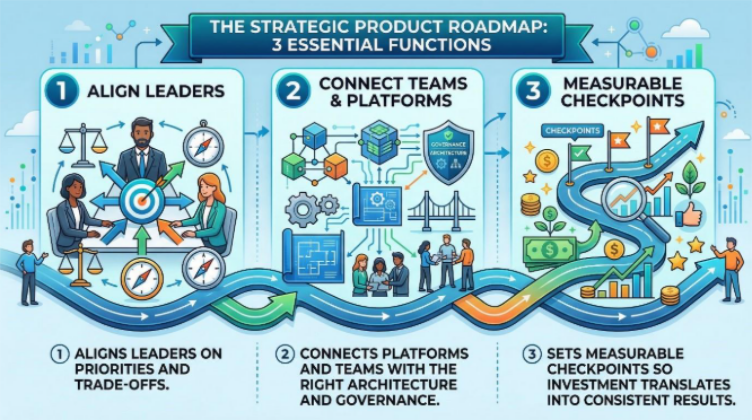
The goal is simple: move from working around systems to relying on an integrated foundation that makes decisions faster and delivery smoother.
An Eight-Step Digital Transformation Roadmap for Success with Cloud, Data, and Artificial Intelligence
Step 1: Define Business Outcomes and Governance
Most transformation efforts go wrong at the starting point. Not because of technology decisions, but because the outcomes are vague or disconnected from business priorities.
At this stage, the focus should be on defining what success looks like. That means being specific about revenue targets, cost reduction expectations, customer experience improvements, and compliance requirements. These are not side metrics. They are the anchors for every technology decision that follows.
Equally important is alignment. Transformation cannot sit only within IT. Leadership across business, product, and technology needs to agree on priorities and trade-offs early. Without this, execution becomes fragmented very quickly. The output here should be a clear, measurable digital transformation strategy tied directly to business KPIs.
Step 2: Assess Current State and Technical Debt
Before deciding what to build, enterprises need a realistic view of what already exists.
Most organizations are dealing with layers of legacy systems, tightly coupled applications, and data spread across multiple platforms. Add to that security gaps and inefficient workflows, and the complexity becomes difficult to manage without a structured assessment.
This step is about mapping dependencies, identifying bottlenecks, and understanding where the real constraints lie. It is not just a technical audit. It is a business risk assessment. The outcome should be a clear baseline of current maturity and a prioritized view of what needs to change first.
Step 3: Prioritize High-Impact Use Cases
Not everything needs to be transformed at once, and trying to do so usually slows everything down.
The focus should shift to identifying use cases that deliver immediate and visible value. This could include AI-driven customer support, real-time analytics for decision-making, or improving visibility across supply chains. The idea is to solve problems that the business already feels, not introduce new complexity.
Prioritisation at this stage determines momentum. When early initiatives show measurable impact, it becomes easier to scale transformation across the organization. The output here should be a clear backlog of initiatives ranked by business value and feasibility.
Step 4: Modernize Applications
Application modernization is where transformation starts becoming visible.
Most enterprises are still dependent on monolithic systems that limit flexibility and slow down releases. Moving towards microservices, API-first design, and containerized environments allows systems to evolve without constant disruption.
This is not just a technical upgrade. It directly impacts how quickly teams can ship features, fix issues, and respond to market changes. According to Forrester, modernization initiatives can improve developer productivity by up to 40% — which translates into faster delivery and lower long-term costs.
Step 5: Build a Unified Data Foundation
Data is already available in most organizations. The issue is that it is not usable in a consistent or reliable way.
Different teams work with different versions of data, governance is inconsistent, and real-time access is limited. This creates delays in decision-making and increases compliance risks, especially in regulated industries.
Building a unified data foundation means integrating data across systems, establishing clear governance, and enabling scalable analytics. Once this is in place, decisions become faster, reporting becomes more reliable, and forecasting improves significantly.
Step 6: Scale AI and Generative AI
Most enterprises have already experimented with AI. The challenge now is moving beyond isolated pilots.
AI needs to be integrated into core workflows, whether that is through copilots for internal teams, predictive models for decision-making, or automation across repetitive processes. The value comes from consistency and scale, not experimentation.
When implemented correctly, AI improves productivity, enhances customer experience, and reduces operational overhead. The key is to ensure it is connected to enterprise data and governed properly, rather than operating as a standalone capability.
Step 7: Enable DevOps and Automation
Speed is often the difference between successful transformation and stalled initiatives.
Without DevOps practices, even well-designed systems take too long to deliver value. Manual processes, inconsistent deployments, and lack of monitoring create delays and increase risk.
Implementing CI/CD pipelines, Infrastructure as Code, and automated monitoring allows teams to release faster and with greater confidence. It also reduces dependency on individual teams, making the entire system more resilient and scalable.
Step 8: Measure, Optimize, and Scale
Transformation does not end with implementation. It evolves continuously.
Once systems are in place, the focus shifts to tracking performance. This includes business KPIs, system efficiency, and return on investment. Without measurement, it is difficult to understand what is working and what needs to change.
Optimization is an ongoing process. The goal is to refine what has been built, scale successful initiatives, and ensure that the transformation continues to deliver value over time.
Key Challenges Encountered by Enterprises and Strategic Solutions
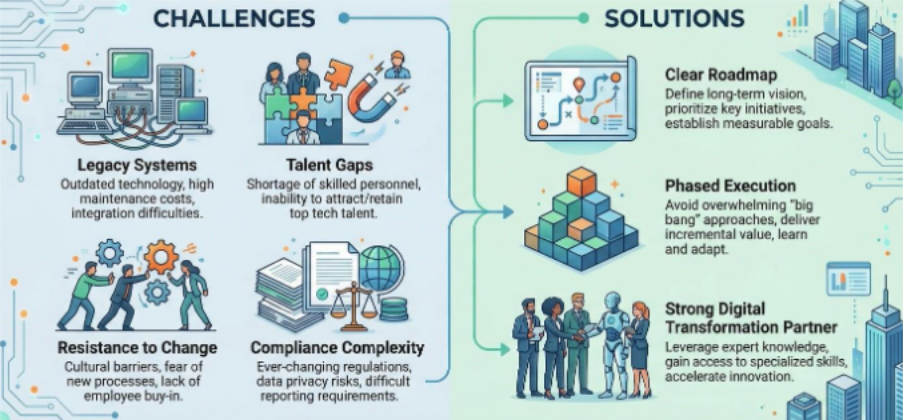
Once the obstacles are addressed, execution is where outcomes show up. Here’s what that looks like in practice and how Claritus helps teams get there.
Real-World Impact and Why Claritus Consulting
The real impact of digital transformation is revealed during implementation. That’s why partnering with Claritus for your digital transformation strategy matters. Here are some examples of our success stories, illustrating measurable outcomes we’ve delivered to clients—results we can help you achieve too.
A prominent real estate company improved operational efficiency by 30–40% and reduced manual tasks through comprehensive transformation.
A premium seafood brand increased supply chain visibility by more than 50%, ensuring compliance and quality with real-time tracking.
These aren’t one-off gains, they represent what happens when transformation is executed thoughtfully, not just planned. This sets Claritus Consulting apart as a digital transformation partner.
Leveraging expertise in app modernization, cloud-native development, data analytics, Generative AI, and end-to-end DevOps, Claritus aligns technology choices with business goals.
The focus isn’t simply on tools; it’s on effective execution. Transformation is assessed by tangible improvements, not just by what gets implemented.
Prepared to take your strategy into action?
Discover how Claritus Consulting supports you in creating and expanding your digital transformation plan across cloud, data, and AI.
Explore Digital Transformation Solutions with Claritus Consulting
Frequently Asked Questions (FAQs)
1) How long does a digital transformation roadmap take to create?
Most enterprises can produce a usable roadmap in 4–8 weeks if they scope it to priority domains (apps, data, cloud, security, operating model). The timeline stretches when ownership is unclear, current-state discovery is incomplete, or decisions require multiple governance forums.
2) What’s the difference between a digital transformation strategy and a roadmap?
Strategy defines why you’re transforming and what outcomes matter (revenue, cost, risk, experience). The roadmap defines how you’ll deliver those outcomes—sequencing initiatives, funding, dependencies, architecture guardrails, and measurable checkpoints.
3) What should we prioritize in the first 90 days?
Focus on foundation + momentum: confirm governance (decision rights, KPIs), map critical application and data dependencies, establish a minimum-security baseline, and pick 2–3 high-impact use cases that can ship value without rewriting everything.
4) How do we balance technical debt reduction with new feature delivery?
Treat modernization as a delivery enabler, not a parallel program. Set an explicit capacity split (for example, 60/40 or 70/30 between product delivery and modernization), and modernize along the value stream (strangler pattern, API-first, modular decomposition) so teams keep releasing while debt drops.
5) Where do security and compliance fit in the roadmap?
They belong in every step, not as a final gate. Define security architecture early (identity, least privilege, encryption, logging), bake controls into CI/CD, and align governance with regulatory requirements. This reduces rework and makes audits predictable instead of disruptive.
6) Do we need a unified data foundation before scaling AI/GenAI?
You can start with targeted AI use cases early, but scaling safely requires governed, high-quality data. A practical approach is to run AI pilots in parallel while you build the minimum data layer needed for reuse: catalog, lineage, access controls, and reliable pipelines for priority domains.
