










Quick Answer: A resume gap does not automatically indicate a lack of capability, commitment, or potential. In today’s evolving job market, career interruptions can result from layoffs, restructuring, upskilling, personal responsibilities, or prolonged job searches. The most effective hiring decisions come from evaluating skills, experience, relevance, and readiness for the role rather than focusing solely […]

Quick Answer: Staff Augmentation often makes more sense than full-time hiring when organizations need specialized expertise quickly, must scale teams for time-bound initiatives, or require greater workforce flexibility without long-term employment commitments. It allows businesses to access skilled professionals while maintaining control over projects, budgets, and delivery timelines. Key Overview: Hiring full-time employees remains an […]

Quick Answer: Custom applications often become difficult to modify because business processes evolve faster than software architecture. Over time, undocumented dependencies, aging technology components, accumulated workarounds, and changing operational requirements increase the complexity, cost, and risk of making even minor changes. Application Modernization helps organizations regain flexibility, reduce maintenance burdens, and align applications with current […]

Quick Answer: Executives lose trust in dashboards when data definitions are inconsistent, metrics conflict across departments, data quality issues persist, and reporting fails to support business decisions. Restoring confidence requires strong data governance, clear ownership, and reliable reporting processes. Key Overview: Dashboard trust is not solely a technology challenge. When leaders encounter conflicting metrics, outdated […]

Quick Answer: Resume inflation is increasing as candidates use AI tools to enhance applications, making it harder for employers to assess genuine capabilities. Skills-based hiring, structured assessments, and stronger verification processes help organisations identify candidates who can perform effectively in the role. Key Takeaway: In an AI-assisted hiring environment, organisations achieve better hiring outcomes by […]

Quick Answer: Many digital transformation initiatives stall not because of technology limitations, but due to unclear priorities, slow decision-making, fragmented ownership, low adoption, and governance challenges. Identifying these issues early helps organisations restore momentum and improve outcomes. Key Takeaway: Successful digital transformation requires more than new technology. Sustainable progress depends on clear governance, accountable leadership, […]

Imagine hiring an employee who can read thousands of documents in seconds, detect patterns across databases, draft customer responses and trigger actions across the business. Now imagine giving that employee access to everything on day one. That is effectively what happens when enterprises deploy AI without clear permissions, data boundaries or accountability. The central governance […]

Quick Answer: Many enterprise technology initiatives slow down not because the technology is difficult to implement, but because decisions become increasingly fragmented across stakeholders, governance groups, vendors, and business functions. Effective IT consulting services help organizations establish clearer decision ownership, governance frameworks, and accountability models that keep transformation initiatives moving forward. Key Takeaway As enterprise […]

Quick Answer AI success depends on vendor relationships because enterprise AI increasingly operates through a connected ecosystem of models, applications, platforms, infrastructure providers, and external partners. As organizations scale AI adoption, managing these relationships becomes essential for controlling risk, maintaining governance, protecting data, managing costs, and ensuring long-term flexibility within an enterprise AI strategy. Key […]
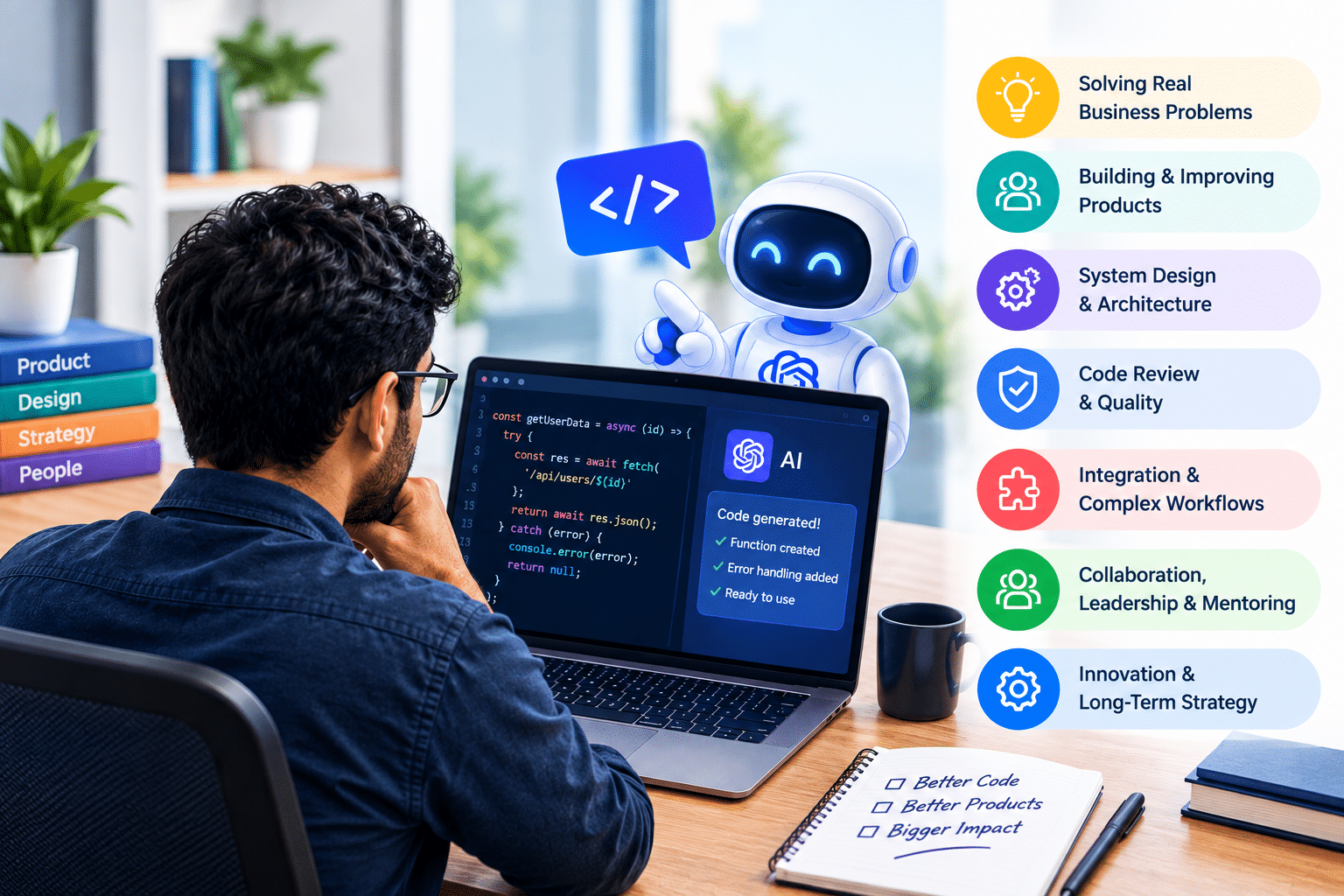
Quick Answer As AI takes on more coding tasks, enterprises are shifting their focus from code production to problem-solving, architecture, business understanding, validation, and delivery outcomes. The value of developers is increasingly defined by judgment, not just execution. Key Takeaway AI is changing what developers do, but it is not eliminating the need for developers. […]
